 Flash SaleInvest in your skills
'%3E%3Cpath fill='%23CDCCD8' stroke='%23CDCCD8' stroke-linecap='round' stroke-linejoin='round' stroke-width='1.5' d='M10.5 5.5C7.2 5.5 6 6.6 6 9.63 6 6.6 4.8 5.5 1.5 5.5 4.8 5.5 6 4.4 6 1.38 6 4.4 7.2 5.5 10.5 5.5'/%3E%3C/g%3E%3Cdefs%3E%3CclipPath id='a'%3E%3Cpath fill='%23fff' d='M0 0h12v11H0z'/%3E%3C/clipPath%3E%3C/defs%3E%3C/svg%3E) Accelerate your career

 TECHADEMY
Popular & Trending
 PMIPopularProject Management Professional (PMP) Certification
 i-Hub IIT PatnaTrendingAI & Data Science Certification Program from Vishlesan i-Hub Foundation IIT Patna
 i-Hub IIT PatnaTrendingAgentic AI Program from Vishlesan i-Hub Foundation IIT Patna
 TechademyPopularCertified AI Solutions Architect
 TechademyPopularCertified AI Native Project Manager
 TechademyPopularCertified AI Native Business Analyst
Agentic AI & Data Science
i-Hub IIT PatnaTrendingAI & Data Science Certification Program from Vishlesan i-Hub Foundation IIT Patnai-Hub IIT PatnaTrendingAgentic AI Program from Vishlesan i-Hub Foundation IIT Patna TechademyBest sellerCertified Agentic AI Engineering Program
 TechademyBest sellerCertified Agentic AI No Code Bootcamp
 TechademyBest sellerAI Forward Deployed Engineer (FDE) Transition Program
 TechademyAI ML Career Transition Program
 TechademyAI ML Interview Preparation Program
Artificial Intelligence
TechademyPopularCertified AI Solutions Architect TechademyAI Mastery BootcampTechademyPopularCertified AI Native Business Analyst
 TechademyCertified AI Native Marketing Accelerator
 TechademyCertified No-Code AI DeveloperTechademyPopularCertified AI Native Project Manager
 TechademyTrendingAI Native Product Manager Transition Bootcamp
 TechademyTrendingCertified AI Native Product Manager
 TechademyPopularCertified AI Native Scrum Master
Project Management


Agile Management
 Scrum AlliancePopularCertified ScrumMaster (CSM) Training & Certification
 Scrum AllianceBest sellerCertified Scrum Product Owner (CSPO) Certification Training
 ICAgileCertified Agile Coach (ICP-ACC) Certification
 Scrum.orgProfessional Scrum Product Owner (PSPO) Certification
 Scrum.orgProfessional Scrum Master (PSM) Certification
 Scrum.orgPSM A Certification Training Course
 Scrum AllianceBest sellerA-CSPO Certification Training
 Scrum AllianceAdvanced Certified Scrum Master (A-CSM) Certification Training
 Scrum AllianceBest sellerCSP-SM Certification Training
Cyber Security


BI and Visualization


IT Service Management


Cloud Computing


'%3E%3Cpath stroke='%23CDCCD8' stroke-linecap='round' stroke-linejoin='round' stroke-width='1.5' d='M16.63 9.5c-5.23 0-7.13 1.9-7.13 7.13 0-5.23-1.9-7.13-7.12-7.13C7.6 9.5 9.5 7.6 9.5 2.38c0 5.22 1.9 7.12 7.13 7.12'/%3E%3C/g%3E%3Cdefs%3E%3CclipPath id='a'%3E%3Cpath fill='%23fff' d='M0 0h19v19H0z'/%3E%3C/clipPath%3E%3C/defs%3E%3C/svg%3E) Six Sigma Certification
Lean Six Sigma Black Belt Training
Master Six Sigma principles and display leadership qualities as a Lean Six Sigma Black Belt professional.

Looking for more details? Download Brochure'%3E%3Cpath stroke='%23fff' stroke-linecap='round' stroke-linejoin='round' stroke-width='1.5' d='M3.33 14.17v1.66A1.67 1.67 0 0 0 5 17.5h10a1.67 1.67 0 0 0 1.67-1.67v-1.66m-10.84-5L10 13.33l4.17-4.16M10 3.33v10'/%3E%3C/g%3E%3Cdefs%3E%3CclipPath id='a'%3E%3Cpath fill='%23fff' d='M0 0h20v20H0z'/%3E%3C/clipPath%3E%3C/defs%3E%3C/svg%3E)
'%3E%3Cpath d='M3.07 12.87a7.5 7.5 0 1 1 13.86-5.74 7.5 7.5 0 0 1-13.86 5.74'/%3E%3Cpath d='m7.5 10 1.67 1.67 3.33-3.34'/%3E%3C/g%3E%3Cdefs%3E%3CclipPath id='a'%3E%3Cpath fill='%23fff' d='M0 0h20v20H0z'/%3E%3C/clipPath%3E%3C/defs%3E%3C/svg%3E) Skill up to helm Six Sigma implementation in enterprisesDevelop superior data analysis skills for process improvementPropel your career with a sought-after certification

 36Hours of live training
 35PDUs on completion
 4Simulation tests
 750k+Careers transitioned


 Join 750k+ learners

' d='M7.08 1.27a.6.6 0 0 0-.5 0 1 1 0 0 0-.24.24l-.17.32-1.25 2.53-.04.08-.09.02-2.8.4-.34.06a.6.6 0 0 0-.31.16.6.6 0 0 0-.15.47c.01.14.09.24.15.31l.25.26 2.03 1.97.06.06-.02.09-.47 2.78q-.05.21-.05.35-.03.16.05.35.13.23.4.29a.6.6 0 0 0 .34-.06l.32-.15 2.5-1.32.08-.04.08.04 2.5 1.32q.18.1.32.15a.6.6 0 0 0 .35.06.6.6 0 0 0 .4-.3.6.6 0 0 0 .05-.34q-.01-.15-.05-.35L10 8.24l-.01-.09.06-.06 2.02-1.97q.15-.14.25-.26a.6.6 0 0 0 .16-.31.6.6 0 0 0-.15-.47.6.6 0 0 0-.31-.16l-.35-.06-2.8-.4-.09-.02-.04-.08-1.25-2.53-.17-.32a1 1 0 0 0-.24-.24'/%3E%3Cdefs%3E%3ClinearGradient id='a' x1='1.07' x2='12.17' y1='6.83' y2='6.83' gradientUnits='userSpaceOnUse'%3E%3Cstop offset='.68' stop-color='%23FEBC3B'/%3E%3Cstop offset='.69' stop-color='%23FEBC3B' stop-opacity='0'/%3E%3C/linearGradient%3E%3C/defs%3E%3C/svg%3E) 4.8/5 (7,900+ ratings)
Community

Features of the Six Sigma Black Belt Course


Live Training
36 hours of live, online training led by top instructors and practitioners.

35 PDUs
Earn 35 PDUs on completion, to use for your further professional development.

Simulation Tests
4 simulation tests to practice for the exam and assess your readiness for it.
Industry Projects
2+ hours of simulated, real-life industry projects, to put what you learn into practice.

Case Studies
5+ case studies from across industries, for a better grasp of every concept.

Exam Study Plan
A study plan that guides your preparation for the Lean Six Sigma Black Belt exam.

Prime Pass
180 days of workshop access with Prime Pass, to attend more live classes.

GenAI Masterclasses
Live Generative AI for Quality Managers masterclasses, to bring AI into your work.
The Techademy Edge

Guaranteed-to-Run Workshops
The Lean Six Sigma Black Belt training from Techademy is guaranteed-to-run under any situation or condition.


Trainers
Top instructors and practitioners lead the training, so you get the most comprehensive preparation for the certification.

Skill Perfection
Perfect the skills you learn in the course with 2+ hours of simulated, real-life industry projects.

Exam Support
Prepare for the Six Sigma Black Belt certification with 4 simulation tests and an exam study plan.
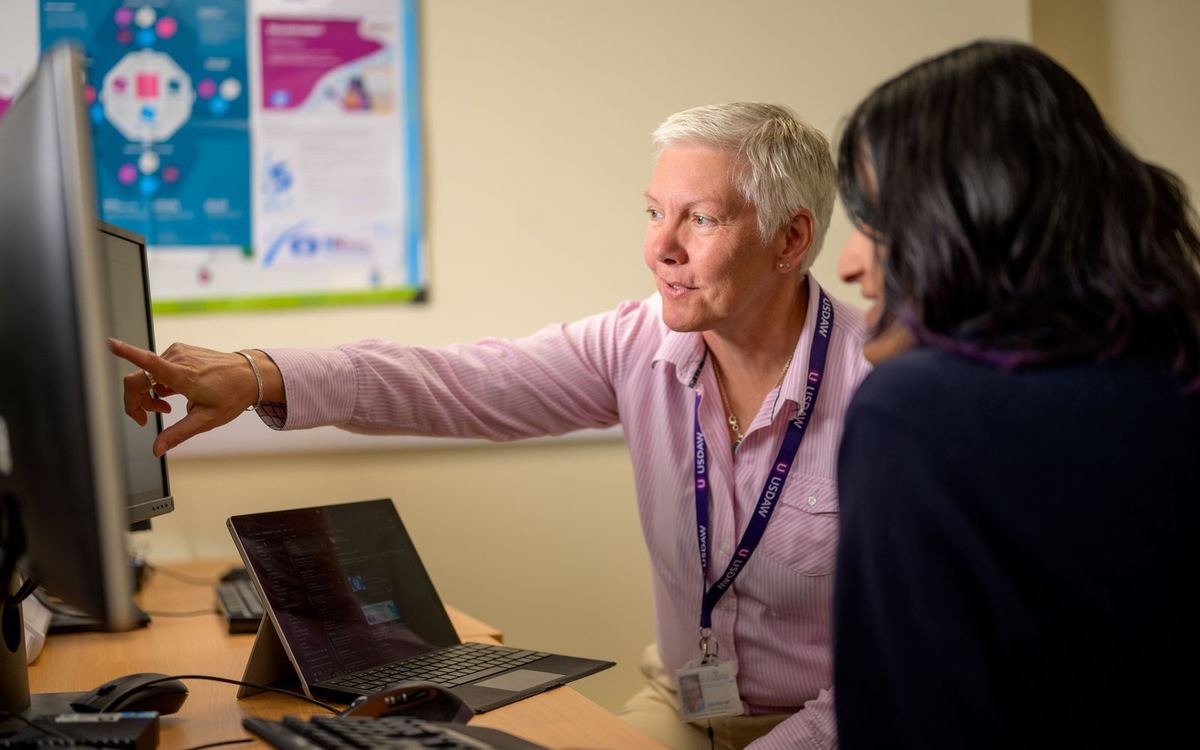
24x7 Support
Get help at any time with your questions about the course, the certification and more, through 24x7 learner support.

Job Support
A LinkedIn Profile Optimisation Guide with a complimentary review, plus access to 1500+ job listings.
Tuition Fee
Live Online Class
 36 hours of instructor-led training
- 35 PDUs on completion
- 4 simulation tests for exam practice
- 2+ hours of real-life industry projects
- A study plan for the Black Belt exam
- 24x7 learner assistance and support

Curriculum for Six Sigma Black Belt
Five modules that follow the DMAIC model, from defining a problem to controlling a process.
Define Phase
Write problem and goal statements, process maps and project charters, identify customers and capture their needs, and use root cause analysis to find the causes of problems.
- Topic 1.1: The Basics of Six Sigma
- Meaning of Six Sigma
- History of Six Sigma and Continuous Improvement
- Deliverables of a Lean Six Sigma Project
- Problem Solving Strategy Y=f(x)
- Voices of Business, Employees and Customers
- Six Sigma Roles and Responsibilities
- Topic 1.2: Fundamentals of Six Sigma
- Defining a Process
- Critical to Quality Characteristics (CTQs)
- Cost of Poor Quality (COPQ)
- Pareto Analysis (80:20 Rule)
- Basics of Six Sigma Metrics: DPU, DPMO, FTY and RTY Cycle Time
- Topic 1.3: Selecting Lean Six Sigma Projects
- Building a Business Case and Project Charter
- Developing Project Metrics
- Financial Evaluation and Benefits Capture
- Topic 1.4: The Lean Enterprise
- Understanding Lean
- The History of Lean
- Lean and Six Sigma
- The 7 Elements of Waste: Overproduction, Correction, Inventory, Motion, Overprocessing, Conveyance and Waiting
- 5S: Straighten, Shine, Standardise, Self-discipline and Sort
Measure Phase
Identify and quantify sources of variation, understand how processes behave, set baselines, collect data, trace causes and effects, refine measures and test whether shifts are significant.
- Topic 2.1: Process Definition
- Cause and Effect/Fishbone Diagrams
- Process Mapping, SIPOC and Value Stream Map
- X-Y Diagram
- Failure Modes and Effect Analysis (FMEA)
- Topic 2.2: Six Sigma Statistics
- Basic Statistics
- Descriptive Statistics
- Normal Distributions and Normality
- Graphical Analysis
- Topic 2.3 Measurement System Analysis
- Precision and Accuracy
- Bias, Linearity and Stability
- Gage Repeatability and Reproducibility
- Variable and Attribute MSA
- Topic 2.4: Process Capability
- Capability Analysis
- Concept of Stability
- Attribute and Discrete Capability
- Monitoring Techniques
Analyse Phase
Identify problems and their causes with the right tools, make decisions from data, visualise data to find patterns, and document your work so it can be reproduced.
- Topic 3.1: Patterns of Variation
- Multi-vari Analysis
- Classes of Distributions
- Topic 3.2: Inferential Statistics
- Understanding Inference
- Sampling Techniques and Uses
- Central Limit Theorem
- Topic 3.3: Hypothesis Testing
- General Concepts and Goals of Hypothesis Testing
- Significance; Practical vs Statistical
- Risk; Alpha and Beta
- Types of Hypothesis Tests
- Lesson 3.4: Hypothesis Testing with Normal Data
- 1 and 2 Sample T-tests
- 1 Sample Variance
- One Way ANOVA: Tests of Equal Variance, Normality Testing and Sample Size Calculation, Performing Tests and Interpreting Results
- Topic 3.5: Hypothesis Testing with Non-normal Data
- Mann-Whitney
- Kruskal-Wallis
- Mood’s Median
- Friedman
- Sample Sign
- Sample Wilcoxon
- One and Two Sample Proportion
- Chi-Squared (Contingency Tables): Tests of Equal Variance, Normality Testing and Sample Size Calculation, Performing tests and Interpreting Results.
Improve Phase
Generate, select and test solutions, map and refine processes, measure improvement, set process standards and measurement systems, plan pilots, reduce risk and prepare for hand-off.
- Topic 4.1: Simple Linear Regression
- Correlation
- Regression Equations
- Residuals Analysis
- Topic 4.2: Multiple Regression Analysis
- Non-linear Regression
- Multiple Linear Regression
- Confidence and Prediction Intervals
- Residuals Analysis
- Data Transformation and Box Cox
- Topic 4.3: Designed Experiments
- Experiment Objectives
- Experimental Methods
- Experiment Design Considerations
- Topic 4.4: Full Factorial Experiments
- 2K Full Factorial Designs
- Linear and Quadratic Mathematical Models
- Balanced and Orthogonal Designs
- Fit, Diagnose Model and Center Points
- Topic 4.5: Fractional Factorial Experiments
- Designs
- Confounding Effects
- Experimental Resolution
Control Phase
Develop monitoring and response plans, establish statistical process control (SPC), embed new practices and use control charts to oversee processes.
- Topic 5.1: Lean Controls
- Control Methods for 5S
- Kanban
- Poka-Yoke (Mistake Proofing)
- Topic 5.2: Statistical Process Control (SPC)
- Data Collection for SPC
- I-MR Chart
- Xbar-R Chart
- U Chart
- P Chart
- NP Chart
- Xbar-S Chart
- CuSum Chart
- EWMA Chart
- Control Methods
- Control Chart Anatomy
- Subgroups, Impact of Variation and Frequency of Sampling
- Center Line and Control Limit Calculations
- Topic 5.3: Six Sigma Control Plans
- Cost Benefit Analysis
- Elements of the Control Plan
- Elements of the Response Plan

Testimonials from Six Sigma Learners
What learners say about the training, the exam preparation and the support around them.

Good support
The support received all through the course and certification was excellent.

Found a suitable job
Got a job through the job listings provided. Thank you so much.

Excellent study plan
The pass guarantee study plan was an excellent addition to help in preparing for the exam and excelling in it.

Topnotch training
Training was topnotch with every principle of Six Sigma explained with examples.

Comprehensive exam preparation
The simulation tests were a big help in practicing for the exam. All the questions in the exam were covered in the practice tests.

 Google
 Trustpilot
 Course Report
Still have a question? Get in touch with our experts
Not sure the Black Belt course is right for you? Talk to an advisor about the course, the exam and your schedule.
What you will learn
Six skills that improve quality, speed and cost, from understanding a process to eliminating its errors.
Customer Satisfaction
Get skilled to smoothen the delivery process and improve customer satisfaction through enhanced quality.
Production Efficiency
Learn to stay competitive through timely delivery of customer needs by accelerating production rate.
Cost Efficiency
Discover how to identify and eliminate unnecessary expenses to bring about cost efficiency.
Problem Evaluation
Learn to use quantitative and statistical analysis to understand problems and facilitate enhanced workflow.
Understanding Processes
Get an understanding of processes in order to be able to make improvements to them.
Error Detection and Elimination
Develop the expertise to detect errors and take preventive measures to stop them from reoccurring.
Eligibility

Prerequisites for the Lean Six Sigma Black Belt Training

There are no prerequisites to attend the Lean Six Sigma Black Belt certification training.
Real-world working experience of Lean Six Sigma is recommended, though it is not required.
The certification is awarded by IASSC to professionals who complete the training and pass the Black Belt exam.

This course is for you
For IT analysts and IT managers, and for change, project, program, improvement, quality system and operational line managers.
IT Analysts
IT Managers
Change Managers
Project Managers
Program Managers
Improvement Managers
Quality System Managers
Operational Line Managers


