


Instructor-Led Training in 2026: The Performance Layer Digital Alone Cannot Replace
 AuthorSonal Modi
 Published17 Feb 2026
 Views60
 Read time10 mins


Executive summary
Instructor-led training is not a legacy format. It is a performance lever within a blended enterprise strategy.
Public data from Google Skills highlights three directional signals:
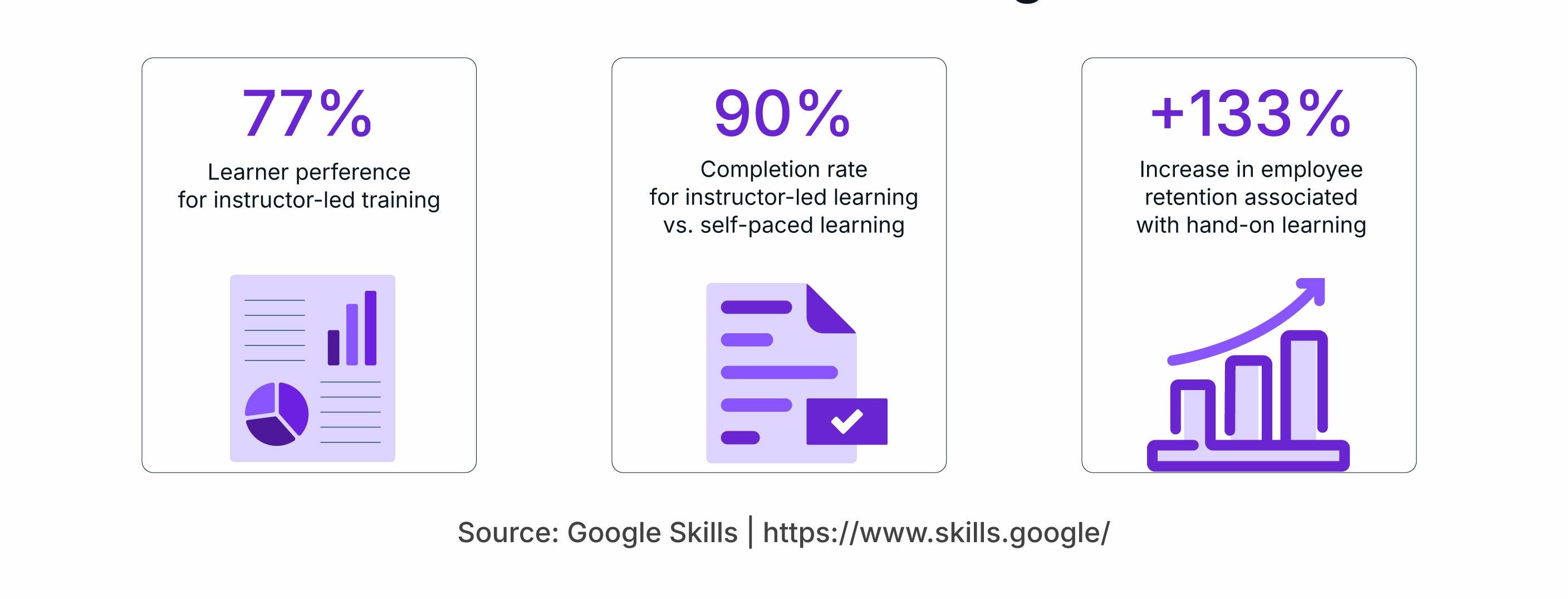
- 77% of learners prefer some level of instructor involvement over on-demand alone.
- Instructor-led learning reports 90% completion compared to less than 5% for self-paced formats.
- Companies investing in hands-on learning report a 133% increase in employee retention.
These figures appear on a public marketing page and do not disclose methodology. They should be treated cautiously and as directional signals rather than definitive proof.
At the same time, HR Dive’s February 2026 coverage reports that learners pay closer attention in live settings and rate human-led training as more effective than digital-only formats. For enterprise L&D leaders measured on readiness, ramp-up time, and retention, the question is not whether to use instructor-led training. The question is where it materially reduces business risk.
Completion Rates Are Not Capability
Over the past five years, many enterprise learning portfolios shifted toward digital-first models to scale faster and reduce delivery cost. This improved reach and simplified logistics.
However, operational leaders increasingly report a gap between completion metrics and applied performance. HR Dive notes that learners report higher attention levels in live sessions and often perceive instructor-led formats as more effective than digital-only learning.
In many organizations, live programs were deprioritized to control cost and increase scale. The shift improved access but reduced structured feedback loops. The result is broader exposure, but uneven application at the point of deployment. Completion dashboards look strong. Operational consistency often does not.
What Current Data Suggests About Hands-On Learning and Outcomes
Google Skills publicly presents three statistics:
- 77% of learners prefer some level of instructor-led training compared to on-demand alone.
- 90% of instructor-led learning is completed versus less than 5% for self-paced learning.
- Companies investing in hands-on learning report a 133% increase in employee retention.
Note: These figures are presented in a promotional context without disclosed methodology. They should be interpreted cautiously.
Observed
- Learners report preference for instructor involvement.
- Completion appears materially higher in instructor-led formats.
- Retention correlates with hands-on learning investment.
Interpretation
If completion and engagement improve when structured practice is embedded, then instructor-led environments may contribute to sustained capability. That does not mean digital learning is ineffective. It suggests human-facilitated practice may address gaps digital formats struggle to close.
Even partial retention improvement would be meaningful in high-attrition environments. However, retention is influenced by compensation, management quality, workload, and culture. Instructor-led training should not be positioned as a single driver.
Why 2026 Demands Structured Human Facilitation
AI adoption is accelerating across roles. Gartner’s 2026 future-of-work trends emphasize combining AI tools with high-touch human strategies rather than replacing them. As automation handles routine work, human judgment becomes more valuable. Instructor-led environments create space for structured debate, scenario rehearsal, and correction under realistic constraints.
HR Dive’s coverage reinforces that attention and perceived effectiveness remain higher in human-led formats. Virtual instructor-led training is increasingly positioned as strategic when interaction and facilitation are intentionally designed rather than improvised. In this context, instructor-led training becomes performance rehearsal, not presentation.
Where Instructor-Led Training Creates Measurable Value
Instructor-led training should be deployed where business risk is highest.
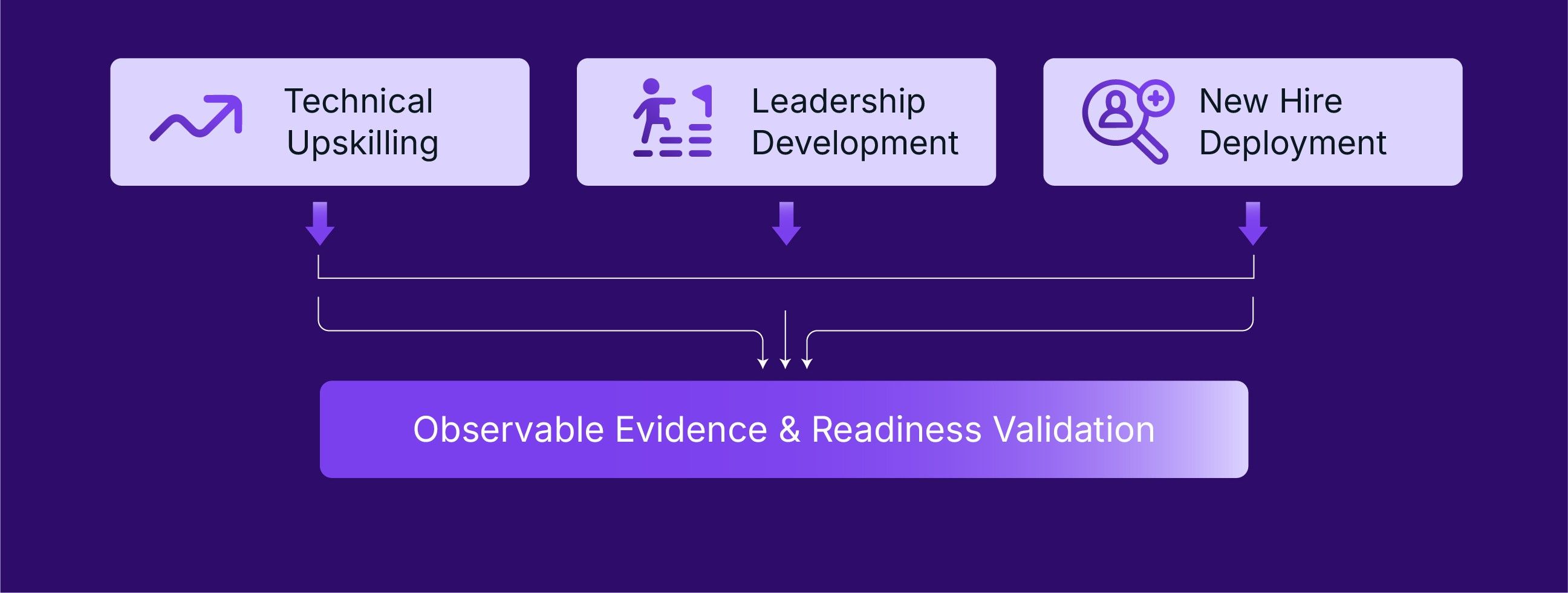
Technical Upskilling
Learners complete diagnostics before live sessions. Instructors focus on friction points in labs and intervene where misunderstanding appears. HRBPs and technical managers must define role-critical tasks to prevent sessions from drifting into content review.
Leadership Development
Facilitated peer discussion exposes trade-offs in real business scenarios. Structured debate improves decision quality when managers are equipped to coach between sessions.
New Hire Deployment
Structured cohorts simulate production environments. Instructors validate readiness before client exposure, reducing early-stage error rates. IT and operations stakeholders must align scheduling and sandbox environments.
In each case, value lies in observable evidence of capability, not attendance.
Example Scenario
A technology services company onboarded 600 engineers annually through digital-first programs. Completion rates exceeded 85%, yet project managers reported inconsistent code quality and longer client ramp-up.
After introducing structured instructor-led labs tied to deployment criteria, readiness reviews identified skill variance earlier. Deployment timelines stabilized within two quarters. The change was not about adding more content. It was about structured practice and validation.
A Practical Playbook for Modern Instructor-Led Design
- Anchor to Role-Critical Tasks
Define the decisions employees must execute in live environments. Involve HRBPs and business leaders.
- Integrate Pre-Session Diagnostics
Surface capability gaps before class begins.
- Design Practice Under Constraints
Simulate ambiguity, time pressure, and incomplete information.
- Capture Observable Evidence
Use task-based rubrics aligned to operational KPIs such as error reduction, project cycle time, or customer satisfaction metrics.
- Blend Intentionally
Use digital modules for knowledge acquisition and instructor-led sessions for rehearsal and correction.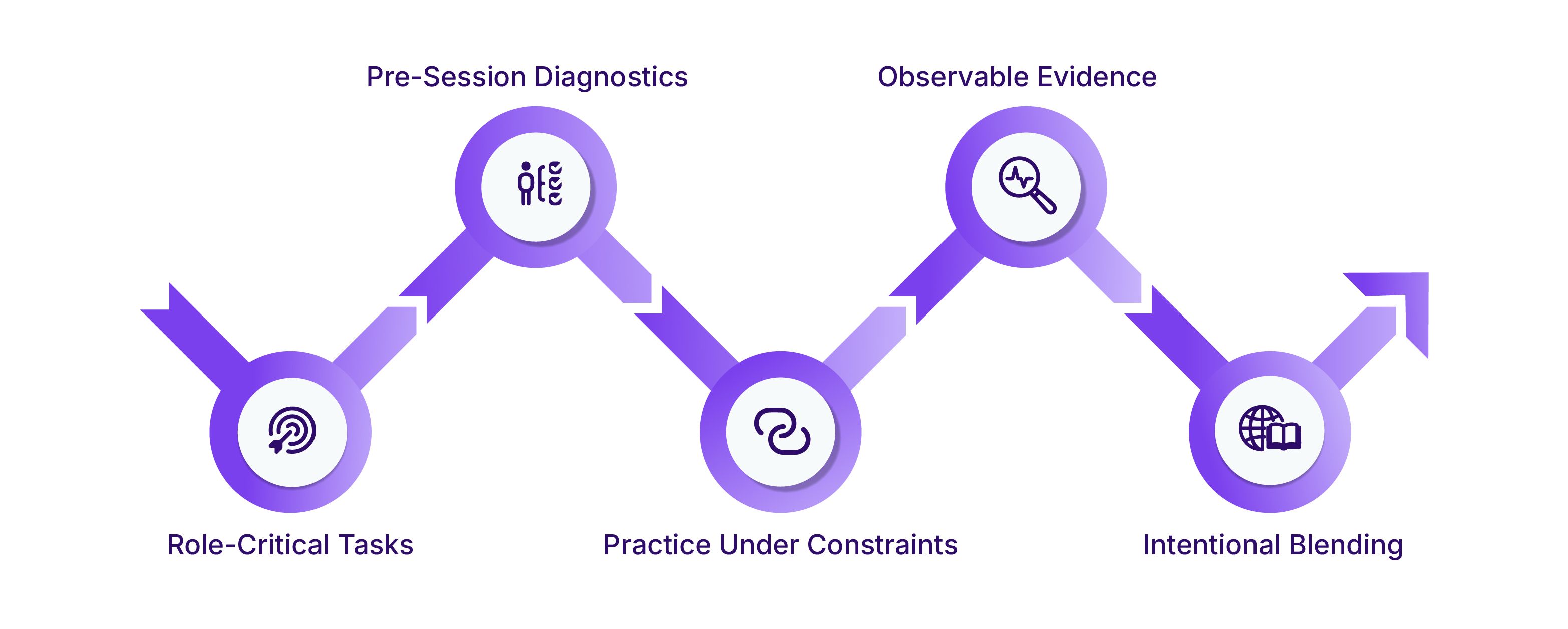
The Trade-Offs Enterprise Leaders Must Navigate
- Instructor-led programs require skilled facilitators, scheduling coordination, and managerial support. CFO scrutiny is common because live formats compete with billable time.
- Scaling facilitators globally requires investment. Procurement cycles can delay rollout. Without stakeholder buy-in from HR, IT, line managers, and risk teams, impact will be limited.
- The trade-off is not cost versus scale. It is short-term efficiency versus long-term capability depth.
Five Takeaways for CLOs and L&D Leaders
- Attention and perceived effectiveness remain stronger in live formats.
- Public data suggests higher completion in instructor-led formats, though methodology is undisclosed.
- Hands-on learning correlates with retention uplift, but attribution should be treated cautiously.
- Instructor-led time should focus on judgment-heavy and high-risk capability gaps.
- Readiness should be defined through measurable, task-based criteria aligned to business KPIs.
A Strategic Question for Your Portfolio
Use instructor-led training where the cost of failure exceeds the cost of delivery. Review your portfolio and identify where judgment errors create measurable business impact. Allocate live intervention there. Reduce it where knowledge recall is sufficient.
Techademy Instructor-Led Training Solutions
Use instructor-led training where the cost of failure exceeds the cost of delivery. Review your portfolio and identify where judgment errors create measurable business impact. Allocate live intervention there. Reduce it where knowledge recall is sufficient.
 Author
Sonal Modi
Chief Operating Officer 124 Articles Published
124 Articles Published
Dr. Sonal Sushil Modi, Ph.D., CPLP®, ATD Certified, is an accomplished learning & development expert with a passion for helping professionals elevate their skills. With extensive experience in designing and delivering transformative learning programs, she bridges academic rigor with real-world application. Her work focuses on leadership development, performance improvement, and building capability in individuals and teams. When she’s not crafting impactful training experiences, Sonal enjoys exploring thought leadership in workplace learning and mentoring future learning professionals.
Share