


Navigating the Future of Work: What Leaders Need to See Clearly Now
 AuthorManjunath Rao
 Published27 Jan 2026
 Views60
 Read time4 mins


The Future of Work Is Not a Single Narrative
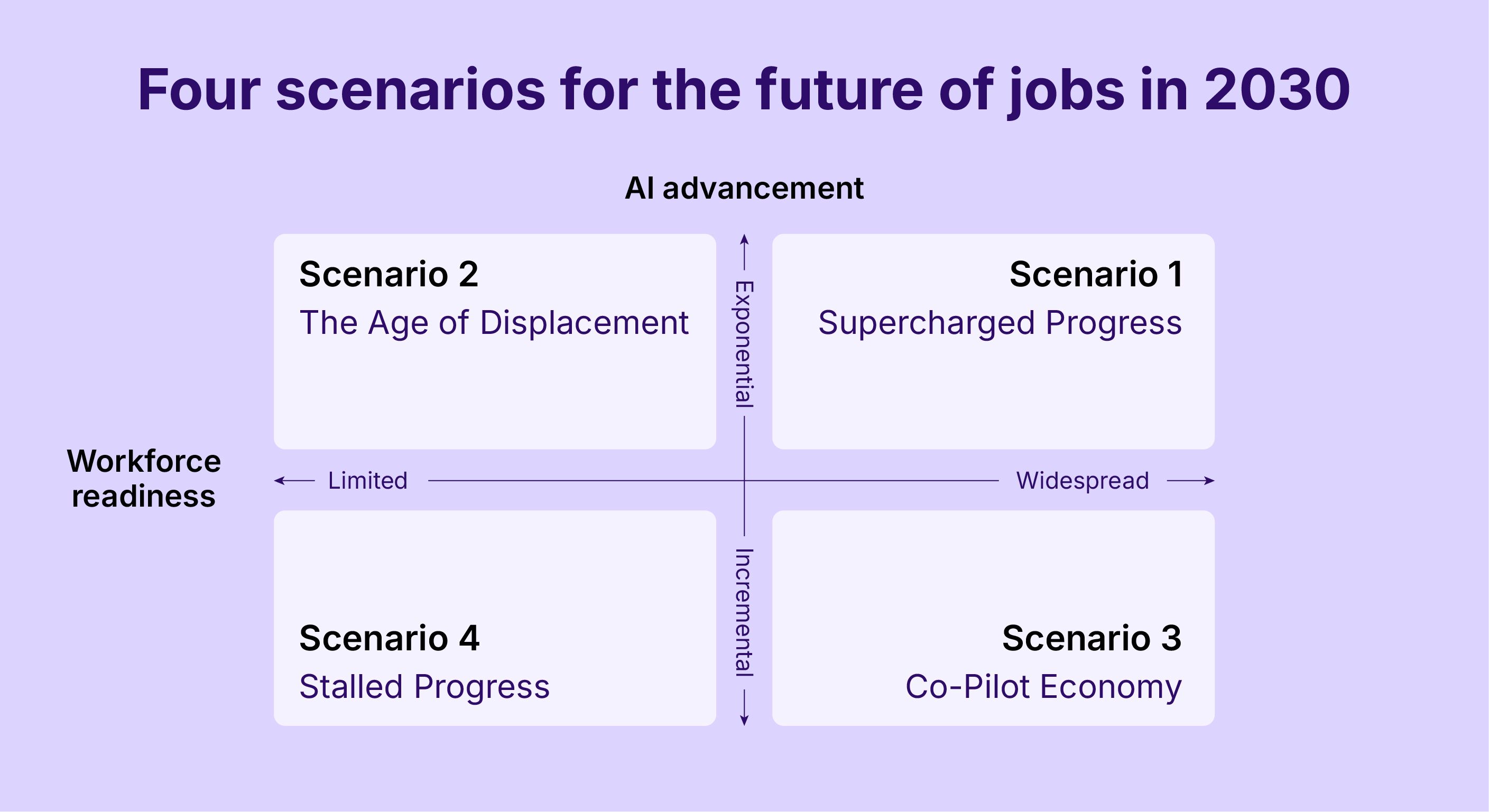
A recurring executive instinct is to ask, “What will the future of work look like?” The more useful question is, “Which future are we actively preparing for?” The World Economic Forum outlines four plausible futures shaped by two variables: the pace of AI adoption and the readiness of people and institutions to adapt. These are scenarios, not predictions, and they coexist across regions and industries.
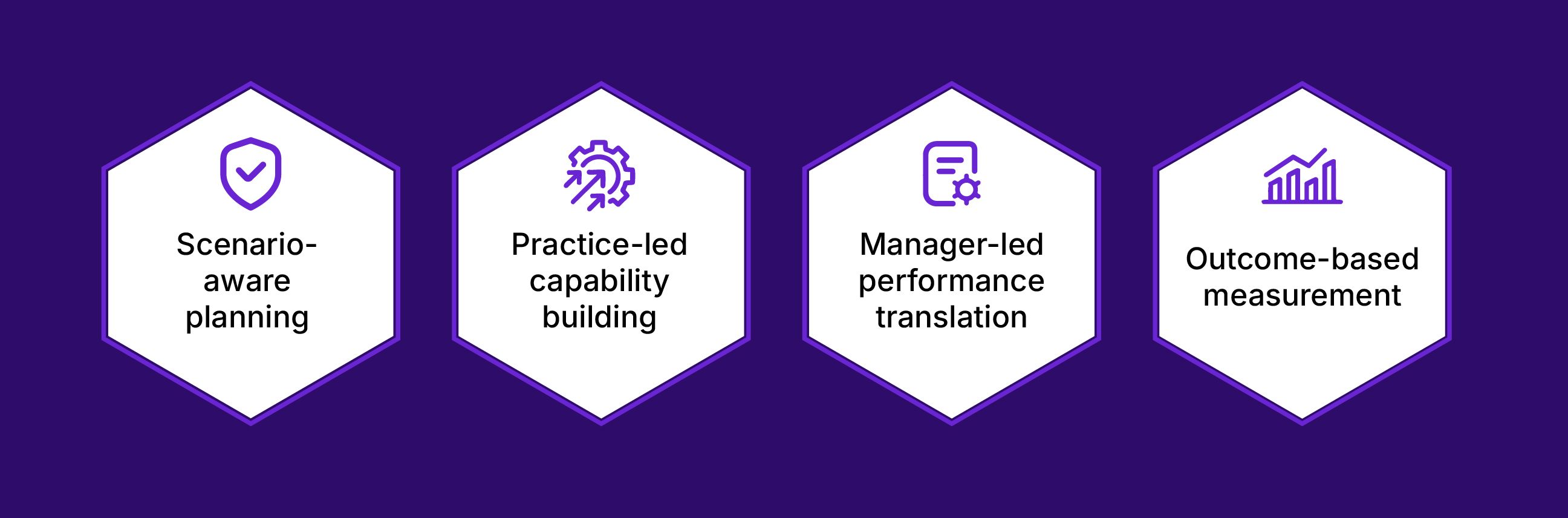
The same technologies can lead to productivity acceleration in one organization and stagnation in another. The difference lies less in tools and more in readiness, role clarity, and leadership discipline. For executives, the implication is straightforward. Strategy must remain scenario-aware rather than anchored to a single assumed outcome.
AI Is Reshaping Work Faster Than Organizations Are Reshaping People
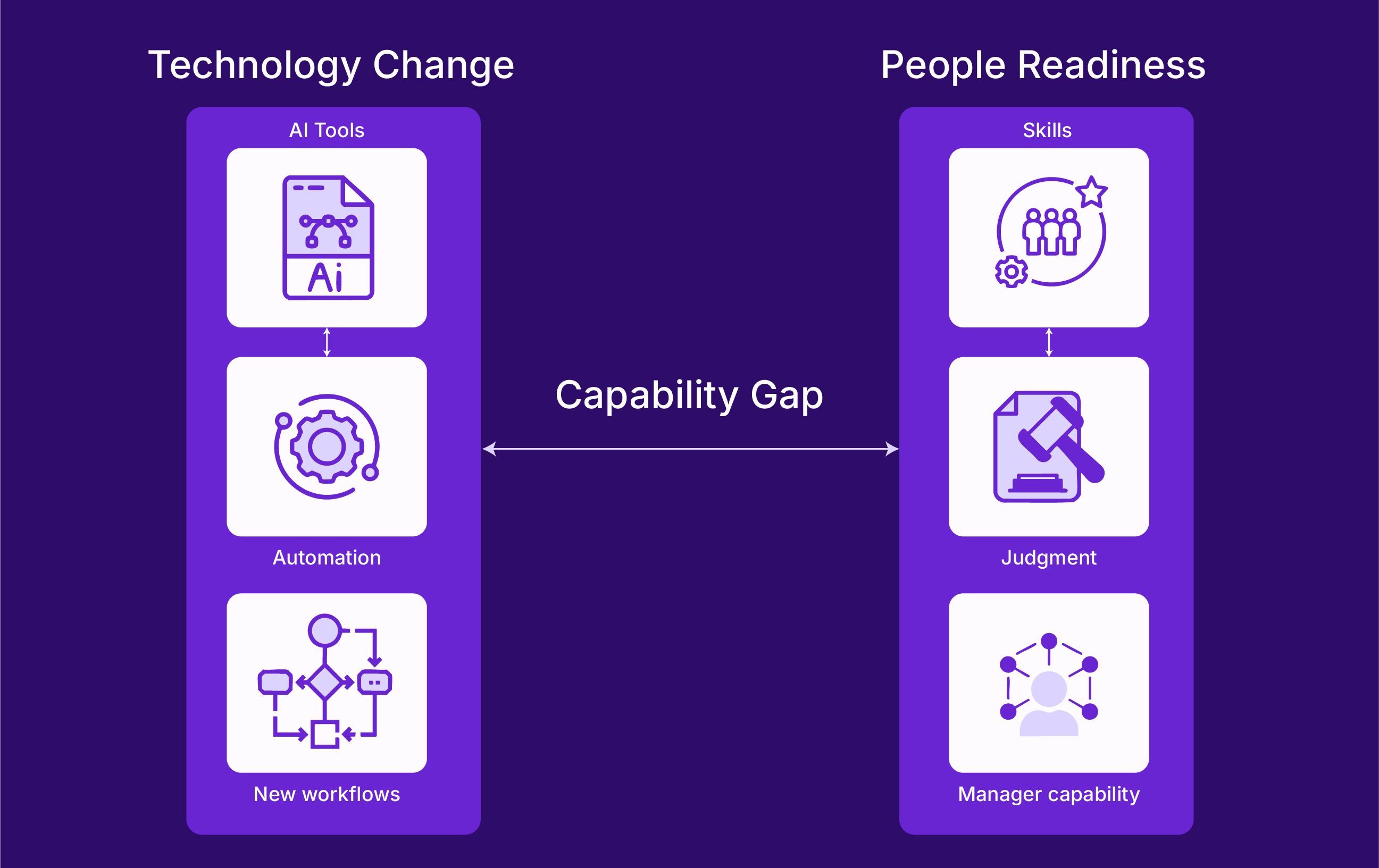
Gartner’s research consistently cautions against assuming linear productivity gains from AI. While AI capabilities are advancing rapidly, most organizations are slower to adapt skills, roles, and managerial practices. In some cases, leadership teams are exploring role restructuring based on expected AI-driven productivity gains, even as actual outcomes remain uneven. This creates risk.
When technology changes faster than human capability, organizations accumulate friction rather than advantage. The central challenge is not access to AI tools. It is the widening gap between new ways of working and people’s readiness to perform within them.
From Job Architecture to Capability Architecture
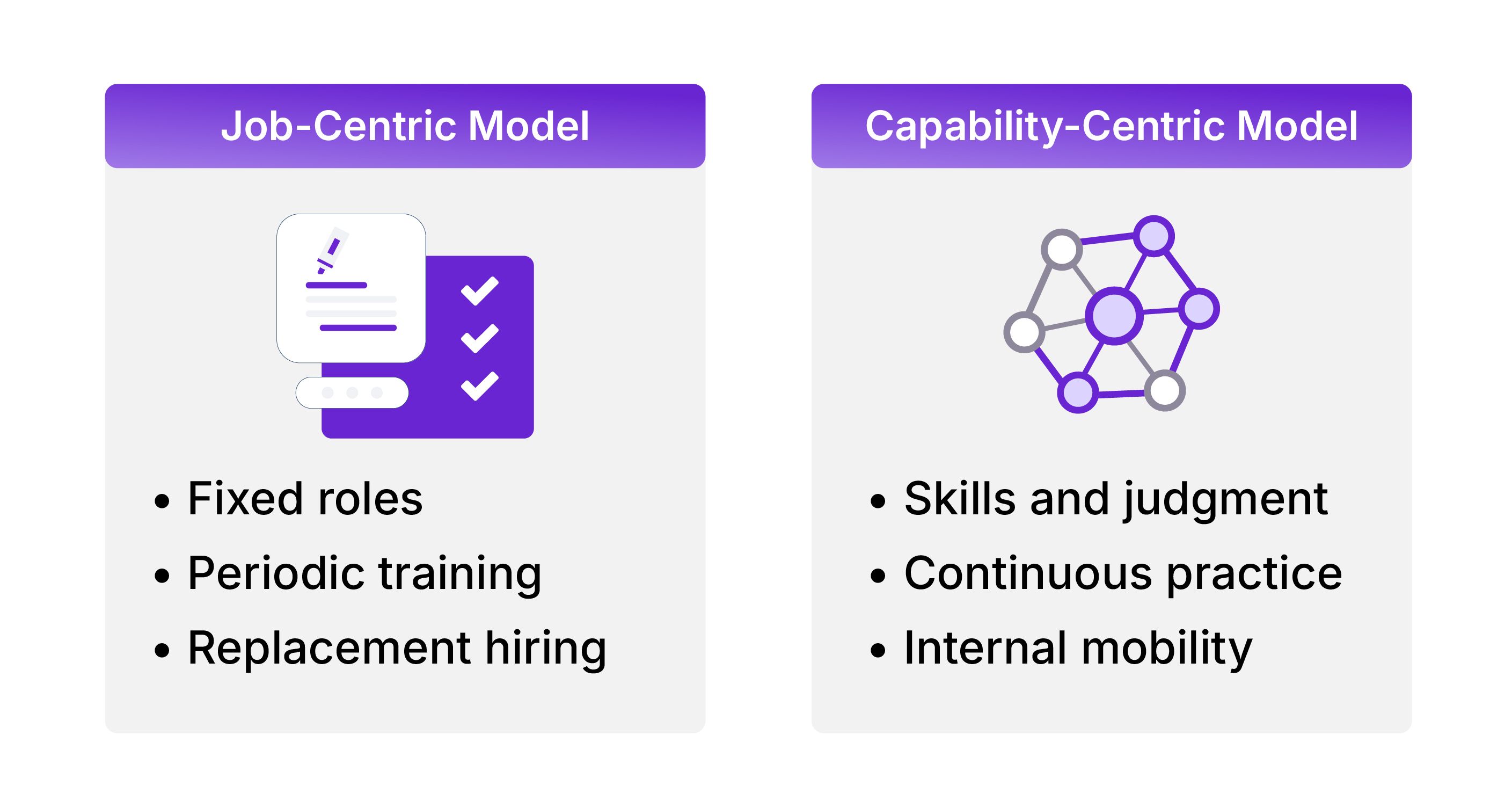
Both reports point to a structural shift that many enterprises underestimate. Traditional job architectures assume relative stability. Roles are fixed, training is periodic, and capability is inferred from titles. This model breaks down when work changes faster than roles can be redesigned.
A capability-based approach starts from a different premise. It focuses on the skills, judgment, and behaviors required to perform evolving work, regardless of formal job boundaries. Workforce advantage will be defined by capability in practice, not by content availability or role labels. This shift is not fast or frictionless. Large organizations face governance constraints, legacy role frameworks, and internal politics. Progress tends to be incremental, not transformational.
What to change: Move selectively, starting with roles most exposed to AI-driven change rather than attempting enterprise-wide redesign.
Managers Are the Translation Layer, Not an Afterthought
Across Gartner’s future-of-work research, one pattern is clear. As work becomes less predictable, managers increasingly act as the translation layer between learning and performance. Managers set context, reinforce expectations, create space for practice, and make judgment calls where automation cannot. When manager capability is weak, learning investments struggle to convert into results.
This is where ownership must be explicit:
- Business leaders define where work is changing
- Managers translate expectations into daily performance
- L&D enables practice, feedback, and measurement
Treating manager enablement as optional is one of the most common failure points in workforce transformation.
What Executive Teams Should Take Away
The combined message from Gartner and the World Economic Forum is pragmatic rather than dramatic. The future of work will reward organizations that move deliberately, not just early. Progress comes from sequencing decisions, not chasing breadth.
Three near-term priorities stand out for the next 12–18 months:
- Identify roles where AI meaningfully changes work, not just tools
- Invest in manager capability as a performance lever
- Measure readiness through observable outcomes, not completions
Over-investing in tools without role clarity, manager enablement, and measurement discipline is the fastest way to stall momentum.
A Leadership Choice, Not a Technology Bet
The future of work will not be decided by AI capability alone. It will be shaped by how leaders sequence change, where they build readiness, and what they choose to measure.
The most consequential decision is not which tools to deploy, but whether the organization is prepared to turn change into performance.
 Author
Manjunath Rao
Chief Business Officer 124 Articles Published
124 Articles Published
Manjunath Rao is the Chief Business Officer at IIHT Ltd and TECHADEMY, with over 12 years of experience in learning and development. He leads the design and delivery of innovative, customer-focused learning solutions across industries, combining strategic insight with operational excellence. Manjunath has a proven track record in formulating and executing short- and long-term business strategies that drive revenue growth and profitability. He is skilled at building strategic alliances with CXO-level stakeholders and managing large, cross-functional teams of over 135 professionals. With four years of P&L responsibility, he has consistently delivered growth exceeding 30 percent, while focusing on transforming organizational learning through smart processes, measurable outcomes, and efficient operations..
Share